|
|
'Sexy Rexy ®' rose Description
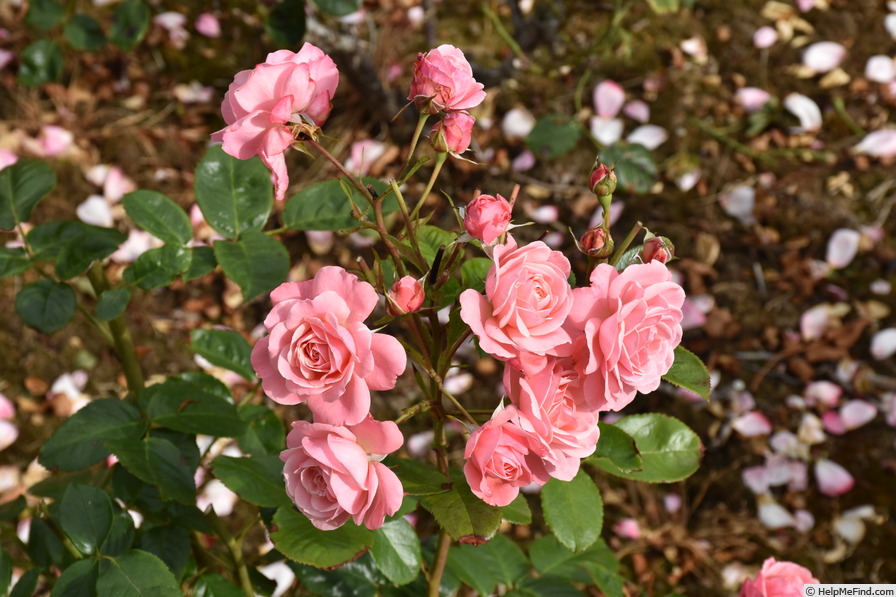
Photo courtesy of Johno
HMF Ratings:
80 favorite votes.
Average rating:
EXCELLENT-.
ARS:
Medium pink Floribunda. Registration name: MACrexyExhibition name: Sexy Rexy ®
Bloom:
Pink. Mild fragrance. 39 to 51 petals. Average diameter 2.75". Medium, very full (41+ petals), in small clusters, cupped, rosette bloom form. Prolific, blooms in flushes throughout the season. Medium, pointed, ovoid buds.
Habit:
Medium, compact, upright. Medium, semi-glossy, dark green foliage. 3 to 5 leaflets.
Height: 28" to 39" (70 to 100cm). Width: up to 2' (up to 60cm).
Growing:
USDA zone 6b and warmer. Can be used for beds and borders, container rose or cut flower. Prefers dry climates. prefers full sun. Spring Pruning: Remove old canes and dead or diseased wood and cut back canes that cross. In warmer climates, cut back the remaining canes by about one-third. In colder areas, you'll probably find you'll have to prune a little more than that. Requires spring freeze protection (see glossary - Spring freeze protection) . Can be grown in the ground or in a container (container requires winter protection).
Patents:
Germany - Patent No: 1 061 603 New Zealand - Patent No: 318 on 10 Jul 1986 Application No: ROS174 on 6 Aug 1984 Trade Name: Sexy Rexy. United States - Patent No: PP 6,713 on 4 Apr 1989 VIEW USPTO PATENTApplication No: 07/116,731 on 28 Oct 1987
Notes:
A little slow to repeat. The stem sometimes cannot hold the heavy heads of bloom upright.
|


